Overview
Digitizing chiyogami paper patterns into clean vectorized graphics for digital and print use.
Goal
Once while trading stationery with a good friend from abroad, he gifted me some chiyogami paper. This paper was hand-printed with chiyogami patterns, which I wanted to use digitally and in print for other media.
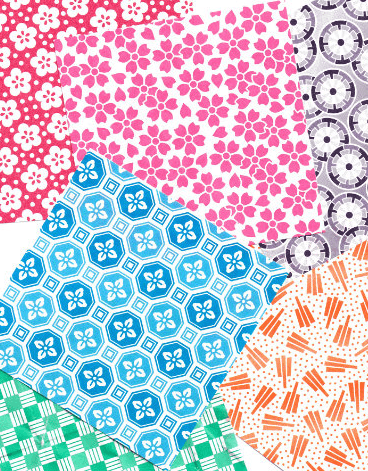
The challenge I decided to pick up was to translate complex traditional patterns into a scalable digital format while preserving rhythm, proportion, and visual balance.
Process
The process consisted of analyzing the patterns and their structure. Some patterns had symmetrical layouts, while others only had recurring elements in a free-form layout. The most important part was uncovering the common element that I could use as modular units.
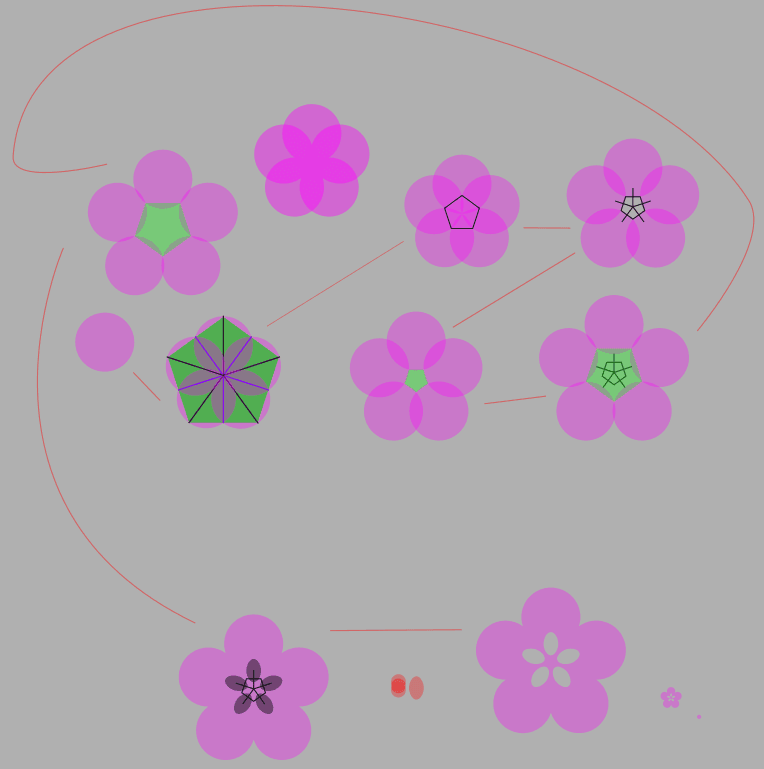
After the analysis I recreated the shapes and elements in vector format, making sure they are seamless, repeatable, and true to the design. Then I rebuilt the pattern as a repeatable tile that I could reuse and scale.
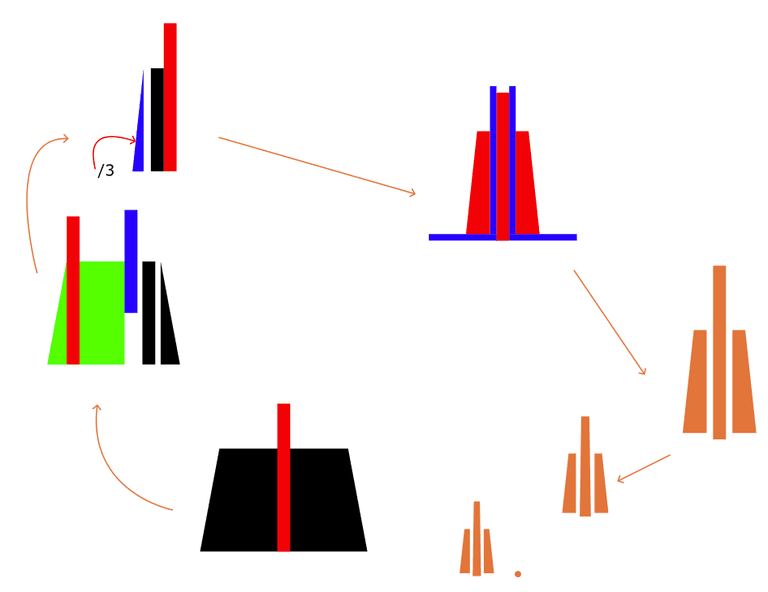
Final steps were to test whether the blocks tiled correctly, and work at different scales, aspect ratios, and image formats. Small refinements include color adjustments and noting construction decisions for future usability improvements.
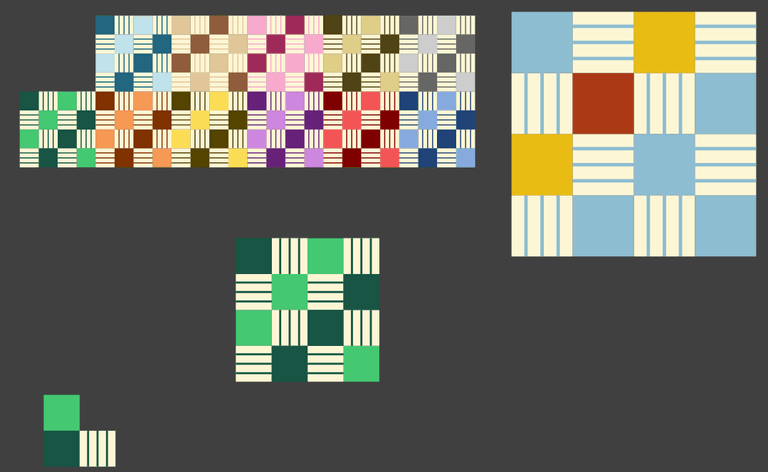
Results
The outcome is vector editor files for each pattern with all the elements and repeatable pattern blocks. Image files of the patterns in different formats ready for digital and print use.



More material available here →
Reflection
This was my first graphic design challenge tackled with a vector graphics editor. My choice of tool was Inkscape, which became my introduction to vector graphics.
This project taught me to be patient, precise, and understanding of pattern logic. I loved that aspect most about the process, since it required mathematical precision.
In the future I want to improve efficiency in building elements and sizing pattern blocks, since I was aiming for symmetry and geometric precision. This means I should use guides and grids more. These tools help to create results that are more predictable and easier to work with.